
Tumor Microenvironment scRNA-Seq
Deconvolving cellular heterogeneity and lymphoid patterns in breast cancer tissue to identify novel cell-surface targets.
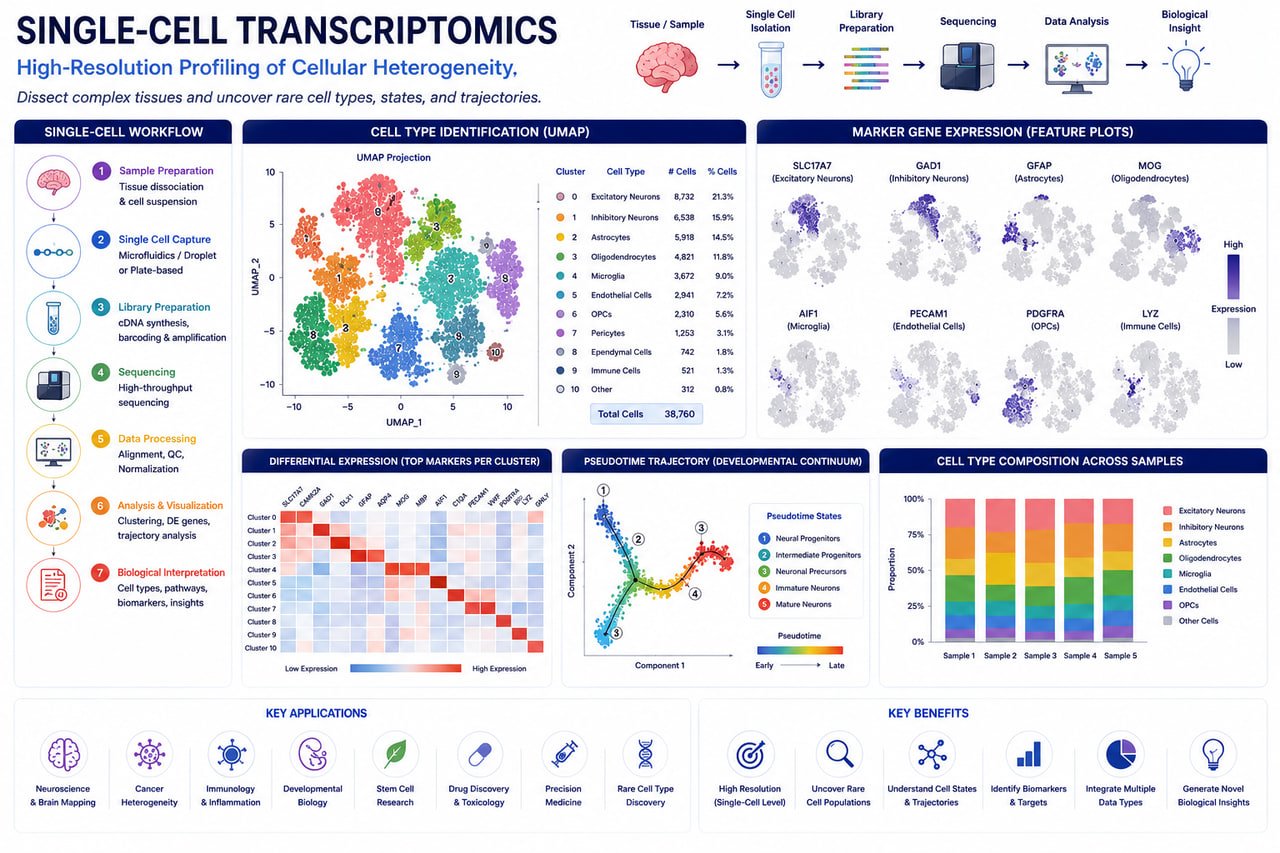
The Challenge
High cellular heterogeneity and noisy transcriptomic profiles of tumor-infiltrating lymphocytes (TILs) often mask critical cell-surface markers. Traditional bulk RNA-seq averages these signals, hiding rare immune cell states that are vital for immunotherapeutic target validation. Integrating multiple patient cohorts also introduces significant batch effects.
RASA's Technical Approach
RASA implemented a standardized single-cell RNA-seq (scRNA-seq) workflow. Following raw FASTQ alignment and CellRanger mapping, we executed strict quality control using DoubletFinder and mitochondrial filters. Batch correction was managed via Harmony integration to align cell populations across multiple patient groups. We then performed non-linear dimensionality reduction (UMAP) and automated cell-type annotation using SingleR and curated immunogenomics reference libraries. Finally, we conducted ligand-receptor interactome profiling with CellChat to map microenvironment communication networks.
Results & Biological Insights
We successfully mapped and deconvolved over 500 single-cell datasets. Our analysis identified a rare subpopulation of exhausted CD8+ T cells expressing a specific target receptor, which was previously unresolvable in bulk samples. This discovery provided our biopharma partner with a high-priority, validated therapeutic target, accelerating their preclinical assay design by 9 months and saving 65% in target validation costs.